
Layer · Process · Proof
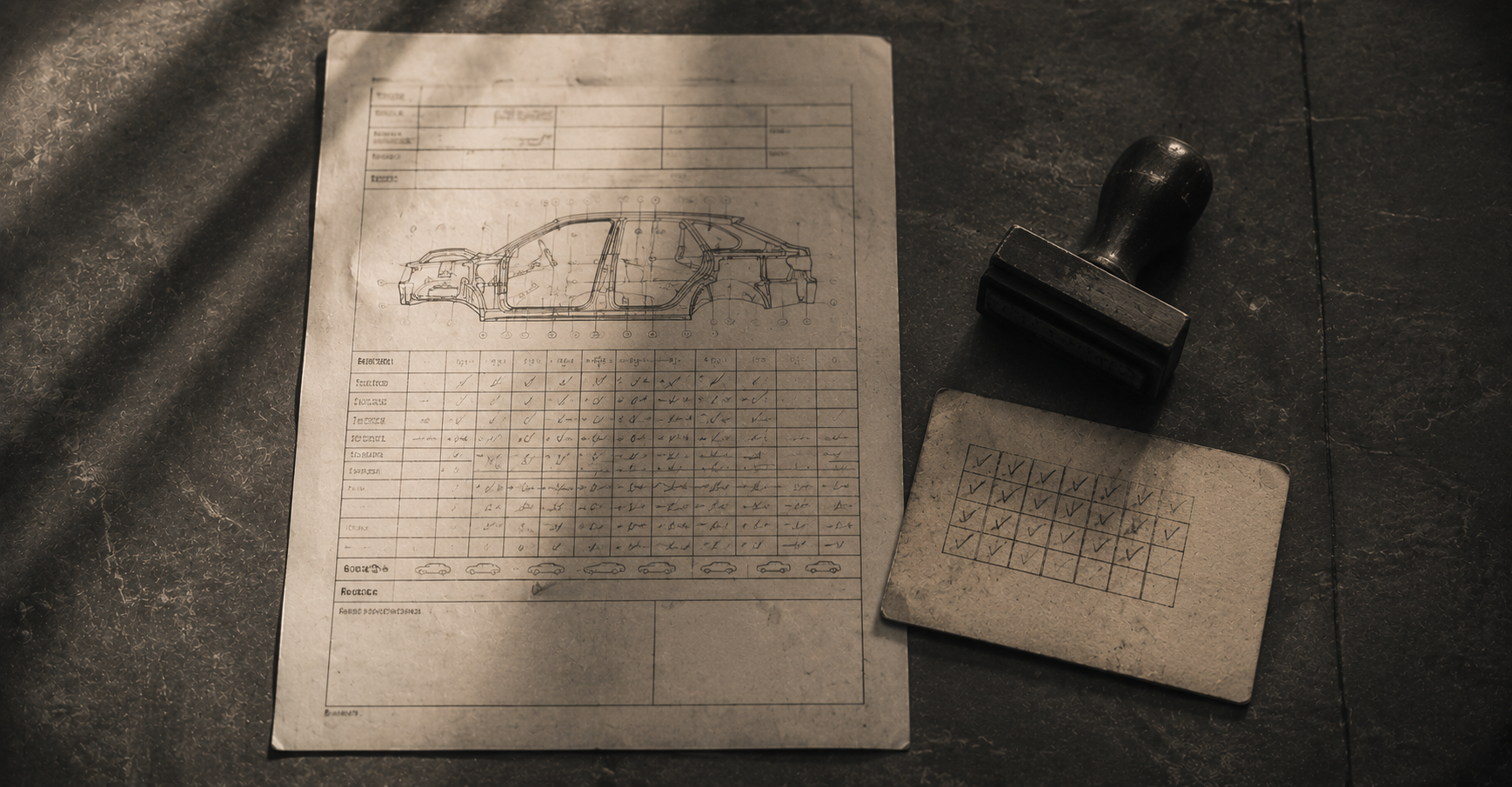
The record is the second half of the product
Proof is the third P in the Process layer — the evidence, produced by the system as it runs, that lets an absent sceptical reader trust the work was done to standard. This week the FDA, Verisk and McKinsey all repriced it.
A digital model of the human liver spent last week doing something no AI drug development tool had done before. It got into the queue. Hold that image, because it is the whole of the third P.
A digital model of the human liver spent last week doing something no AI drug development tool had done before. It got into the queue.
The FDA accepted Absentia Labs' liver model into its ISTAND qualification programme, the pathway a tool must clear before a regulated trial may lean on what it says. The model predicts drug-induced liver injury, which is still among the most common reasons a promising compound is abandoned mid-trial. Acceptance is not endorsement. It is the start of a long argument the tool must win with evidence, one dataset at a time, before anyone treats its output as fact.
Hold that image, because it is the whole of the third P.
The Process layer of a production AI system has three parts, and they arrive in order. Permission sets who is allowed to act, and inside what limits. Practice turns a capability into a habit, the thing the team does on a wet Tuesday rather than the thing that shone in a pilot. Proof is the part that survives the meeting. It is the record, produced by the system itself, that lets a person who was not present trust that the work was done to standard.
Every regulated industry already knows this figure of the absent, sceptical reader. In pharma it is the inspector. In insurance it is the underwriter deciding whether your loss is even covered. This month that reader grew teeth. Verisk's commercial general liability wording now carries endorsements, CG 40 47, CG 40 48 and CG 35 08, that let carriers exclude generative AI losses outright, and agentic exclusions are being drafted as I write. When the record is thin, the risk does not disappear. It simply moves onto your own balance sheet.
What proof is not
Proof is not the pilot report. Every organisation that has run an AI programme owns a deck somewhere with a satisfaction score, a time saving and a slide titled next steps. That document proved one thing: on a chosen day, with chosen inputs and the builders in the room, the system performed. It says nothing about last Thursday's output, produced under load, by a model version two upgrades along, for a customer nobody selected.
Nor is proof the demo. A demo is a performance with a rehearsal. Proof is closer to the flight recorder, dull, continuous and only interesting when something goes wrong, which is precisely when it must already exist. The distinguishing test is simple. If producing the evidence requires anyone to do anything after the fact, reconstruct a log, interview an operator, re-run the query and hope, you do not have proof. You have archaeology.
The firms discovering this now are discovering it the expensive way, under audit, under claim, or under a discovery order. The time to establish what a system did is while it is doing it.
What proof looks like on the floor
Strip away the vendor language and a proof-generating system has four working parts.
First, a versioned record of what was running. Which model, which prompt, which retrieval sources, which tools the agent could reach. Models change under you. A record that cannot say which version produced an output cannot defend that output.
Second, the evaluation harness, run continuously rather than at launch. A fixed panel of known cases, scored on every material change, so that drift is caught by the system rather than by a customer. This is the AI equivalent of the control chart on a production line, and it earns its keep the same way, by making the invisible visible early, when correction is cheap.
Third, the human record. Who approved, who overrode, and what happened next. This is the piece most builds skip, because it feels like friction, and it is the piece regulators ask for first. There is now open tooling for exactly this. Brightbeam's Collaborative Human-Agent Protocol, CHAP, gives human-agent teams one standard way to capture every approval and override as evidence, and, usefully, the same trail becomes training material, because your experts' corrections are the most valuable data you own.
Fourth, revalidation on change. When a model inside a live workflow is swapped for a cheaper or better one, the change is checked against the operational record before it ships, the same discipline a factory applies to a new supplier of the same part.
None of this is exotic. All of it is unglamorous. That is rather the point.
Proof is most of the bill
The instinct is to treat all this as overhead, a tax on the real work. The numbers say otherwise.
McKinsey's QuantumBlack team published a piece this week on the economics of agentic systems, and one finding deserves to be pinned above every programme owner's desk. In an agentic workflow, roughly 60 percent of the cost sits not in generating the first answer but in the checking, repairing and re-verifying that follows. The same analysis notes that agentic tasks can burn around a thousand times the tokens of a chat exchange, largely on the context the system must carry to keep itself honest.
Read that plainly. Verification is not a line item within the work. Verification is most of the work. A budget that funds the answer and starves the evidence is not a lean budget, it is an unfinished one, and the shortfall will be paid later with interest, in rework, in claims carried uninsured, in the audit that takes a quarter because the record has to be excavated rather than printed.
Toyota knew
This is the moment to say again what this series has argued from the start. The AI winners of the next decade will look more like Toyota in 1985 than a model lab in 2023.
Walk the Takaoka line in 1985 and the machinery is not the story. The story is paper and cord. Any worker can stop the line, and the stop is logged. Every deviation is recorded, attributed and answered. The quality record travels with the part, so that a supervisor, an auditor or a customer three years later can know what was built, by whom, to what standard, without asking anyone to remember.
Western manufacturers of the period saw bureaucracy. What Toyota had built was cheaper trust. A buyer could rely on a Corolla without inspecting it, an insurer could price it without loading it, and that reliability, evidenced rather than asserted, is what let Toyota sell quality at a price rivals could not match. The record was not paperwork about the product. The record was the second half of the product.
An AI system that produces answers without evidence is half a product. The organisations treating it that way, and the FDA queue, the Verisk exclusions and the McKinsey cost curve all point the same direction, are not gold-plating. They are finishing the build.
The Monday morning question
One question separates the firms that have this from the firms that have a deck.
If a regulator, a claimant or your own board asked what your AI system did on a specific Tuesday six weeks ago, and why, could you answer from the record, today, without a war room?
If yes, you have proof, and with it the cheapest trust available, the kind you manufacture yourself. If no, the seam above the Process layer is open, the one where output meets board and regulator oversight, and this series has a name for what lives there.
That is next Wednesday's subject, the accountability gap, and the close of the series.
Sources
- FDA accepts Absentia Labs' liver model into the ISTAND qualification programme: https://www.fda.gov/drugs/drug-development-tool-ddt-qualification-programs/innovative-science-and-technology-approaches-new-drugs-istand-pilot-program
- Verisk introduces generative AI exclusion endorsements CG 40 47, CG 40 48 and CG 35 08 for commercial general liability: https://www.verisk.com/insurance/insights/generative-ai-liability-exclusions/
- McKinsey QuantumBlack, the economics of agentic AI systems: https://www.mckinsey.com/capabilities/quantumblack/our-insights/the-economics-of-agentic-ai
- Brightbeam Collaborative Human-Agent Protocol (CHAP): https://www.brightbeam.com/chap